
India's fertiliser subsidy bill for the current financial year (FY27) is projected to increase by approximately 20% due to surging global prices, primarily driven by the West Asia crisis, a senior official confirmed. Despite this, retail prices for urea and di-ammonium phosphate (DAP) will remain unchanged, ensuring adequate supply for the kharif season.
S&P Global Ratings projects India's economy to grow at 6.3 per cent even if crude oil prices average USD 130 per barrel in the current fiscal year, highlighting the nation's resilience amidst the West Asia crisis and strong commitment to fiscal consolidation.

US Secretary of State Marco Rubio said that discussions aimed at halting the conflict with Iran have shown "some slight progress," while simultaneously echoing Washington's dissatisfaction with its NATO allies.

Indian benchmark indices, Sensex and Nifty, closed almost unchanged in a volatile session as investors reacted cautiously to mounting geopolitical headwinds and a significant jump in crude oil prices, with Brent crude surging to USD 94.68 per barrel.

A foreign brokerage warns that sustained crude oil prices above USD 100 per barrel could push India's inflation above the RBI's tolerance level, potentially triggering interest rate hikes.

The threat has raised concerns about possible asymmetric attacks outside the region. Iran has also stepped up attacks on energy infrastructure in Gulf countries.

Pakistan's Punjab government has announced the reopening of all public and private educational institutions after implementing fuel-saving measures due to the conflict in West Asia. The decision comes as fuel supply stabilises and the government secures national fuel stocks.

Indian equities on Dalal Street declined in early trade on Monday as crude oil prices climbed amid fears of further escalation in the West Asia the war. Track Sensex, Nifty50 movement and key market drivers for Apr 6, 2026.
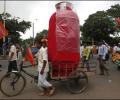
The Haryana government is taking strict action against individuals involved in the black marketing of cooking gas cylinders, resulting in multiple FIRs and the seizure of hundreds of cylinders.

The core issues to be settled -- access to Hormuz, Israel's aggression in Lebanon, the question of Iran's nuclear programme, sanctions relief and compensation -- are thorny enough to require weeks of patient negotiation. The most likely outcome of the opening sessions is that both sides take the measure of each other, establish what is and is not negotiable, and return home without having broken anything. That would count as progress.

Amid escalating tensions with Iran, President Trump is urging nations dependent on Middle Eastern oil to deploy warships to the Strait of Hormuz to safeguard critical global energy supplies.

'When we start describing somebody as an enemy that is the start of politics and emotion after which no business can take place.' 'We need to get out of this, allow Indian businessmen to do business with China.'

'The situation globally is quite challenging, but we have the confidence and courage of conviction that we will come out winners even in this challenging time.'

Police in Ballia, Uttar Pradesh, have registered a case against a petrol pump manager for allegedly denying fuel to a private ambulance, resulting in the death of a 50-year-old patient.

An Indian-flagged crude tanker safely departed from the UAE's Fujairah after loading oil, despite an attack on the oil terminal. The Indian government is closely monitoring the situation in West Asia to ensure stable fuel supplies and maritime safety.

If the conflict continues for a prolonged period, State-run oil companies may have to review retail fuel prices accordingly.

Benchmark indices tumbled about 2 per cent on Friday, capping one of the most turbulent weeks for domestic equities as investors fretted that the West Asian conflict could drag on for weeks or even months.
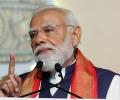
Prime Minister Narendra Modi has urged for restraint in the use of petro products due to the West Asia crisis, emphasising the need to save foreign exchange and reduce the impact of war. He also highlighted India's progress in solar power and ethanol blending, while assuring support to Telangana's development.
Congress leader Rahul Gandhi has criticised Prime Minister Narendra Modi's call for citizens to make economic sacrifices in response to the West Asia conflict, calling it 'evidence of failure'. Gandhi accused Modi of shifting responsibility onto the public and being incapable of running the country.
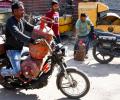
The government has introduced a mandatory 25-day gap between LPG cylinder bookings due to supply concerns arising from global disruptions and tensions in the Strait of Hormuz. This measure aims to prevent hoarding and prioritise essential non-domestic sectors, while domestic LPG production is being increased to mitigate shortages.

Iranian Foreign Minister Seyyed Abbas Araghchi stated that the Strait of Hormuz remains open to all commercial vessels, requiring ships to coordinate with Iranian naval forces due to regional tensions and a US blockade.

India's plans to ration the consumption of liquefied natural gas (LNG) and liquefied petroleum gas (LPG) - in response to reduction in their import owing to war in West Asia - may fall short of what is needed to meet domestic needs.
Delhi Police have dismantled a fake auto parts racket operating in Karol Bagh, arresting two individuals and seizing counterfeit spare parts valued at Rs 25-30 lakh.

Despite international crude oil rates crossing USD 100 per barrel due to Middle East tensions, the Indian government plans to maintain current petrol and diesel prices, ensuring uninterrupted fuel supply across the country.

The Indian rupee appreciated by 23 paise to settle at 92.91 against the US dollar, driven by a weakening American currency, retreating crude oil prices, and renewed foreign institutional investor (FII) inflows amid increasing hopes of easing geopolitical tensions.
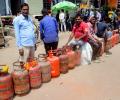
The Indian government has implemented several measures to mitigate external risks, support the balance of payments, and maintain macroeconomic stability amidst the ongoing West Asia crisis, according to Minister of State for Finance Pankaj Chaudhary.

The US-China rapprochement, however tenuous, is not without implications for India. Both China and Pakistan have become closer to the US, notes Ambassador T P Sreenivasan.

Despite a sharp increase in import duties on gold and silver to 15 per cent, the precious metals are trading at significant discounts in the domestic market, with gold seeing discounts of up to $200 an ounce and silver up to $6 an ounce.
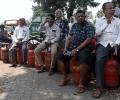
India restricts subsidised LPG connections for households with piped natural gas (PNG) to ensure equitable distribution and address global energy supply concerns, pushing for faster PNG adoption.

Foreign brokerages have started to cut their year-end targets for the Nifty 50 index amid the ongoing West Asia conflict.

Iran on Thursday spelled out three conditions to end the war with Israel and the United States, which entered its thirteenth day today. Taking to X, Iran's President Masoud Pezeshkian said he reaffirmed the country's commitment to peace during talks with leaders of Russia and Pakistan.

The government has sharply reduced excise duty on petrol to 3 and diesel to zero, offering major relief to consumers. Here's how the price cut will impact fuel rates and inflation.
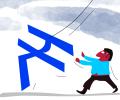
The Indian rupee depreciated by 28 paise to settle at 93.44 against the US dollar, influenced by ongoing uncertainties surrounding West Asia peace negotiations, volatile crude oil prices, and the Reserve Bank of India's recent adjustments to non-deliverable forward market regulations.

The petroleum ministry on Friday reaffirmed the government's commitment to maintaining stable petrol and diesel prices, despite India's high dependence on imports.
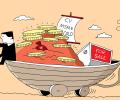
Several non-banking financial companies (NBFCs) are observing an increase in early-stage delinquencies within their micro, small and medium enterprises (MSME) loan portfolios, primarily driven by supply chain disruptions and escalating raw material costs exacerbated by the ongoing conflict in West Asia.

The Indian government has directed oil refineries to increase LPG production to ensure a stable supply of domestic cooking gas, amidst concerns over potential disruptions from the escalating Middle East conflict and its impact on imports.

The Indian government has increased the export duty, or windfall tax, on diesel to Rs 55.5 per litre and on aviation fuel (ATF) to Rs 42 a litre, effective immediately, to boost domestic availability and prevent exporters from exploiting global price differences.

For that to happen America does not have to lose. It only has to do the right thing, asserts Aakar Patel.

Despite a ceasefire agreement between Iran and the United States, the Strait of Hormuz remains blocked due to Iran's inability to locate and remove all the mines it laid during the conflict, hindering global oil and gas supplies.

India's sugar consumption is projected to fall by nearly 400,000 tonnes in the 2025-26 season, primarily due to the ongoing liquefied petroleum gas (LPG) shortage exacerbated by the West Asia conflict and unseasonably cool weather.
